
What does Malmö taste like? In 2026, the City of Malmö set out to answer that question through “A Goal for Malmö,” a competition organised in collaboration with the Malmö Food Council to find a signature dish reflecting the city’s diversity, creativity and commitment to sustainability.
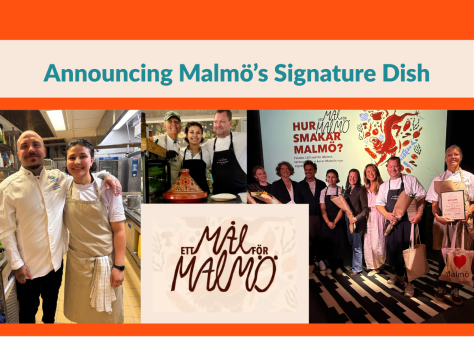
For Karin Tingstedt, representative of the City of Malmö and Vice President of The Food Capitals, the initiative also demonstrates how cities can learn from one another through the network.
Malmö was inspired by fellow Food Capital Gothenburg, which launched its own competition to create a sustainable signature dish for the city. The winning Gothenburg Royale, created by Malin Boban, was shared as a best practice within The Food Capitals.
Malmö took that inspiration and adapted it to its own context, asking how a signature dish could represent not only local food and sustainability, but also the extraordinary diversity that characterises the city.

“One of the great strengths of The Food Capitals is being able to see what other cities are doing and translate those ideas into our own local context. Gothenburg inspired us, and we wanted to create something that could encapsulate Malmö: diverse, creative, sustainable and open to influences from around the world.” - Karin Tingstedt, City of Malmö & Vice President of The Food Capitals
The competition was more than just creating a tasty recipe. Entries were assessed around three main principles: sustainability and health, connection to Malmö, and accessibility. Chefs were encouraged to prioritise plant-based ingredients, whole grains, legumes or root vegetables; minimise food waste; and use local, seasonal and organic products wherever possible.
At the same time, the dish needed to reflect Malmö’s diversity, culture and creativity, yet be simple enough for people to cook the recipe themselves from their homes. The aim was to use food to increase awareness of sustainable eating, strengthen pride in Malmö’s food culture and further position the city as a progressive food destination.
The winner was “Malmö in a Tagine,” created by Rahma Kiswani: a fusion of Moroccan, Palestinian and Scandinavian flavours that brings together Malmö’s multicultural identity and the food heritage of southern Sweden.
The historic Malmö herring is given new life alongside ingredients and flavours including sumac and lingonberries. The jury praised the dish as a thoughtful and nutritious fusion that reflects Malmö’s inclusive food culture.
The competition also captured considerable public attention, with Swedish television broadcasting directly from the final, coverage from Swedish radio and a major feature in the local press.
Malmö joins other Food Capitals exploring how a signature dish, or product, can tell the story of a city:
In Gothenburg, the Gothenburg Royale combines local culinary heritage with a vision for a more sustainable food future.
In Castelldefels, the Arròs de Castelldefels was developed with local chefs and historians, drawing on the city’s culinary heritage and its distinctive position between the Mediterranean and surrounding agricultural landscapes.
And in Lausanne, the city has had its own official chocolate since 2012, selected through a competition among local chocolatiers. The recently chosen “Escales lausannoises” by Acarré, which will become Lausanne’s official chocolate for 2027–2031, takes people on a journey through some of the city’s emblematic places, transforming a local artisanal product into an edible expression of Lausanne itself.
Now Malmö brings another dimension: using a signature dish to represent the contemporary multicultural identity of a city.
Four different approaches, but one shared idea, that gastronomy can be a powerful and accessible way to express local identity, tell a city’s story, engage residents and strengthen a sense of place.
